Our Blogs
Hemiplegia After Stroke Physiotherapy for Hand Movement Walking
2026-10-30 22:33:04
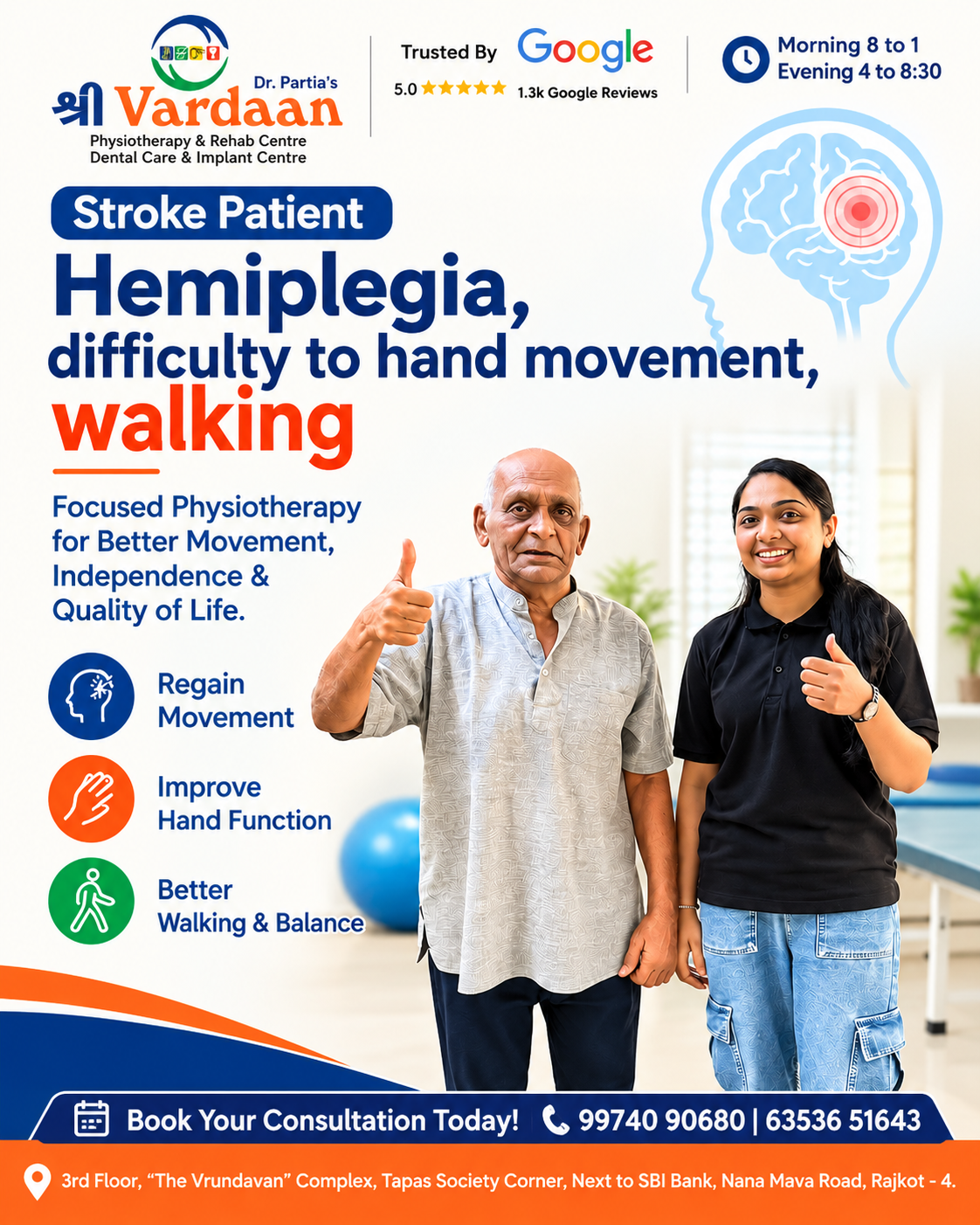
A stroke can significantly affect a person's ability to move, walk, maintain balance, and perform everyday activities. One possible complication is hemiplegia, a condition that causes paralysis on one side of the body. It can affect the arm, hand, leg, and foot, making daily activities more challenging.
With appropriate medical care and a personalized physiotherapy rehabilitation program, many stroke survivors can work toward improving their movement, independence, and quality of life.
In this blog, we will explore what hemiplegia is, how it affects hand movement and walking, and how physiotherapy can support stroke recovery.
What Is Hemiplegia After a Stroke?
Hemiplegia refers to paralysis affecting one side of the body. It can occur when a stroke damages the part of the brain responsible for controlling movement.
Depending on the location and severity of the stroke, a person may experience weakness or paralysis in one arm and leg, difficulty controlling hand movements, balance problems, or challenges with walking.
Common difficulties include:
-
Reduced hand and finger movement
-
Difficulty holding or picking up objects
-
Weakness in the arm or leg
-
Difficulty standing or walking independently
-
Poor balance and coordination
-
Challenges performing daily activities such as dressing, eating, and bathing
The symptoms and recovery process vary from person to person. Early medical assessment and appropriate rehabilitation can help determine the most suitable treatment approach.
How Does Physiotherapy Help After a Stroke?
Physiotherapy plays an important role in stroke rehabilitation. It focuses on improving movement, strength, balance, coordination, and functional independence.
A physiotherapist assesses the patient's condition and develops an individualized rehabilitation plan based on their abilities, needs, and recovery goals.
Depending on the patient's condition, physiotherapy may include:
-
Therapeutic exercises to improve movement and strength
-
Task-specific training to practice everyday activities
-
Balance and coordination exercises
-
Gait training to improve walking
-
Functional training for greater independence
-
Positioning and movement guidance to support safe mobility
The goal is to help the patient practice useful movements and gradually improve their ability to participate in daily life.
Physiotherapy for Better Hand and Arm Movement
After a stroke, some people experience difficulty moving their fingers, gripping objects, or using the affected arm during everyday tasks.
Hand rehabilitation focuses on practicing movements that support practical activities. The exercises selected depend on the patient's muscle control, sensation, strength, and ability to follow instructions.
Common Hand Rehabilitation Approaches
1. Range-of-Motion Exercises
Gentle, guided movements may help maintain joint mobility and reduce stiffness. A physiotherapist can advise which movements are appropriate for the affected arm and hand.
2. Repetitive Task Practice
Practicing suitable tasks, such as reaching for an object or holding a lightweight item, may help improve functional movement over time.
3. Grip and Finger Training
When appropriate, exercises may focus on finger movement, grasping, releasing, and handling everyday objects.
4. Functional Arm Training
Patients may practice using the affected arm during activities such as reaching, touching, or supporting objects under professional supervision.
Hand recovery can take time. Progress depends on several factors, including the severity of the stroke, the level of movement initially present, and participation in rehabilitation.
Physiotherapy for Better Walking and Balance
Walking difficulties after a stroke may result from weakness, reduced coordination, poor balance, changes in muscle tone, or difficulty controlling the affected leg.
A physiotherapist evaluates walking ability and identifies the areas that require rehabilitation.
Walking Rehabilitation May Include:
1. Standing and Weight-Shifting Practice
Suitable exercises can help patients practice standing safely and shifting their weight between their legs.
2. Balance Training
Balance exercises may improve postural control and help patients perform movement tasks more safely.
3. Gait Training
Gait training focuses on practicing walking patterns, step placement, and coordination. Depending on the patient's abilities, a walking aid or physical assistance may be needed.
4. Leg Strengthening Exercises
Appropriate exercises may help improve strength and control in the muscles used for standing and walking.
5. Functional Mobility Training
Patients may practice activities such as standing up from a chair, turning, and moving between different positions.
Walking rehabilitation should be tailored to the individual's needs. Patients should not attempt challenging walking exercises without appropriate support if they are at risk of falling.
Why Is Early Stroke Rehabilitation Important?
Stroke rehabilitation should begin when the medical team determines that the patient is medically stable and ready to participate.
A suitable rehabilitation plan can help patients practice movement, work toward functional goals, and reduce complications associated with prolonged inactivity.
Rehabilitation may continue for weeks, months, or longer, depending on the individual's condition and progress.
Consistent practice, professional guidance, and support from family members can all contribute to the rehabilitation process.
When Should You Seek Medical Attention?
If a person suddenly develops facial drooping, weakness or numbness on one side of the body, difficulty speaking, sudden vision problems, or a sudden loss of balance, seek emergency medical care immediately. These may be signs of a new stroke.
Do not wait for symptoms to improve on their own.
If a stroke survivor experiences new or worsening symptoms, they also need prompt medical assessment.
How Shri Vardaan Physiotherapy & Rehab Centre Can Help
Stroke rehabilitation requires an approach that considers each patient's individual needs, movement difficulties, and recovery goals.
At Shri Vardaan Physiotherapy & Rehab Centre, rehabilitation assessment and physiotherapy guidance can help identify suitable approaches for improving movement, hand function, balance, and walking ability.
The rehabilitation plan should be based on the patient's medical condition, functional assessment, and the treating healthcare team's recommendations.
Frequently Asked Questions (FAQs)
1. Can physiotherapy help hemiplegia after a stroke?
Physiotherapy can help many stroke survivors work toward improving movement, balance, strength, and functional independence. The results depend on the severity of the stroke and individual recovery factors.
2. Can hand movement improve after a stroke?
Hand movement may improve with appropriate rehabilitation and repeated practice of suitable tasks. The amount of improvement varies from person to person.
3. Can a stroke patient walk again?
Some stroke survivors regain the ability to walk independently, while others may need assistance or a walking aid. A physiotherapist can assess walking ability and recommend an appropriate rehabilitation plan.
4. How long does stroke physiotherapy take?
The duration depends on the patient's condition, rehabilitation goals, progress, and medical needs. Some people require rehabilitation for several months or longer.
5. When should physiotherapy begin after a stroke?
Rehabilitation can begin once the medical team confirms that the patient is medically stable and ready. The timing and intensity should be determined by the treating healthcare professionals.
Conclusion
Hemiplegia after a stroke can affect hand movement, walking, balance, and everyday independence. A personalized physiotherapy rehabilitation program can help patients practice functional movements and work toward meaningful recovery goals.
With appropriate medical care, professional guidance, and consistent rehabilitation, stroke survivors can work toward improving their mobility and quality of life.

